
CTB Community Spotlight: Brianne Wetzel, Dean of Seton College
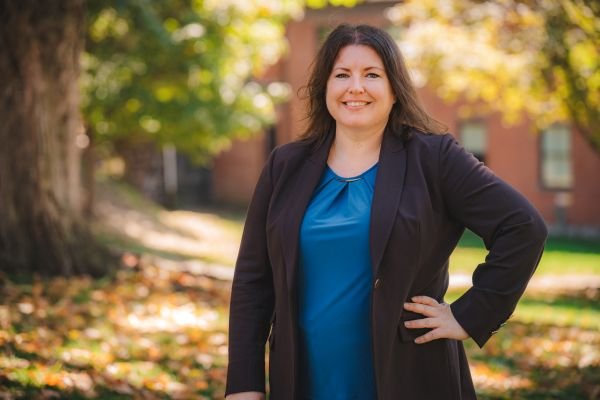
Brianne Wetzel, Dean of Seton College of the University of Mount Saint Vincent
Now beginning its third year, Seton College of the University of Mount Saint Vincent benefits from the strong leadership of its dean, Brianne Wetzel. Brianne joined Seton in September of 2025 and made an immediate impact. In particular, Brianne’s strategic acumen and commitment to student success have led to measurable gains in attendance and retention rates. CTB’s Carlos Martinez sat down with Brianne to discuss her first year as dean, her reflections on the Seton College community, and her goals for the future. You can also listen to their full conversation on CTB’s podcast channel.
Note: Answers have been lightly edited for length and clarity.
Please tell us a bit about your background and what led you to your role as the Dean of Seton College.
I have spent my career up until now working within a network called the NativityMiguel Coalition of Schools, which is a network of full-scholarship middle schools that work with students all the way through college. I started as a volunteer teacher, and then I was a teacher, a principal, a head of school, and ultimately an executive director, and now I get to be the dean here at Seton.
NativityMiguel Schools are all about providing access to opportunity for students and expanding that opportunity. So for me, coming to Seton College and being a part of the Come to Believe network felt really like an extension of that mission of access, of opportunity, of opening up possibility and providing an environment where students can really tap into all of the gifts that they bring. Come to Believe feels like that mission in action in college.
If you had to describe your first year as dean of Seton College in just three words, what would they be and why?
First, I'd say whirlwind, because it really was a whirlwind: getting to know higher education, getting to know Seton College, understanding our students and our faculty and staff and our mission, and really getting grounded in who we are and how we fit into the larger picture of higher education. I spent 20 years in K–12, and you're always learning as an educator, as a human. You're learning all the time.
Second and third, I would say mission and community. That is how I feel about this first year. It's been about finding my place in community, learning who our students are and what our mission at Seton is, getting really clear strategically on what we want to accomplish, and grounding myself in Seton, in the Come to Believe model, and in the people that make this possible. That is really what I came back to at the end of the day, after all of the different things you're navigating, whether it's challenges that come up or just the daily operations of the organization. I always came back to this: this year is about the community, really understanding it and being a part of it.
What has been your favorite memory or proudest achievement from the past year?
I was blessed that I got to be a part of our inaugural graduation, the graduation of our first class. Of course, graduation is special, and just to see the joy on our students' faces. In the events leading up to graduation, we hosted a family brunch and that was really fun—to hear from our parents about how much their students have grown and the impact that Seton had on their students over the last two years, the opportunity that was provided and that was seized, because they really seized this opportunity in a special way.
And then I was able to announce names at graduation. It was that moment of seeing them on stage, of being there with them in that last moment of anticipation before they walked across the stage and really got to celebrate this accomplishment. And then we gathered as a community afterwards, all of Seton. We had a space where we met up with families, with our students, our faculty, and our staff, and just to see the community and be a part of that and witness that. I imagine if you ask me next year what my favorite part of the year was, I'm probably going to say graduation again. But to see the first one for Seton and our students, who have described themselves as trailblazers, as they truly are, that hands down was my favorite moment of the year. Nothing can top that.
Stepping into institutional leadership always comes with a learning curve. What was the biggest challenge you faced this year, and how did you and your team overcome it together?
One of the things we really looked at during my first year was how students were persisting: from fall-to-spring, fall-to-fall, and ultimately to graduation. And I remember when I first met Father Steve, he shared some wisdom with me that I won't forget. He said, "If I were you, I would be laser-focused on retention and completion." And I thought, yes, that’s it: how do we support our students in persisting through college?
We did a lot of initiatives around retention, including a big student support initiative that was all hands on deck: regular check-ins with students, regular progress reports, really leaning in on the strength of a small community, knowing everyone, knowing how to reach out and build relationships with students, find out what's going on and how we can be of support.
I am very proud of what these initiatives accomplished. We saw a 12% increase in persistence in fall-to-spring retention compared to Seton’s first year. We've already increased the number of students who will return in the fall, and that number continues to grow. We have at least three students who stopped out in their first year who are coming back next year because of those relationships, because of that outreach. So I am really proud of that—it was something I saw as I came in, I heard it from our students, and we all worked together and made some great progress.
A college is only as strong as its community. How have you approached building trust and connecting with students, faculty, and staff over the past year?
I think the beautiful thing about the Come to Believe model is that we're built on community. I often say to prospective families that when you choose Seton, you choose to be noticed. You choose to be known. And that is unique. It shouldn't be, but it's our superpower: to notice, to know who our students are and really build those relationships. So that's what I tried to do. This year, and it'll continue next year and so on, was really about understanding individually who we are and how we fit in collectively.
I'm lucky that at Seton we have an office suite where all of the faculty and staff are together, so I get a chance to really connect with folks. I spent a good amount of my first semester in Carson Commons just wandering and sitting down with students, hearing about their experience and how things were going.
I've really just tried to find ways to connect, informally and formally: bringing people together, attending events, whether it was things our student council sponsored, our mentorship events, or any student engagement events I could be a part of. I felt it was really important to be there. That is the best part of the day, finding time to connect with a student or our faculty and staff and just say hello and ask, "Tell me what's on your mind." And I'll continue to do that, and I'll think of more ways to do it formally as I get into my second year, whether that's starting a dean's council for our students or other ways to consider leadership with them.
I've also appreciated very much the opportunity to connect with Come to Believe peers through the convenings and the meetups. During my interview, actually, one of the things our faculty shared was that we were part of a larger network and could connect with peers who could share their experiences. That really is a gift, because you have folks who've been there, who've navigated it, who've built a college like we're trying to do here at Seton. So it's the community within, and then it's the bigger community we have as a part of the network, which has been really wonderful to get to know.
When you look at the trajectory of Seton College a few years down the line, how do you hope this first year will have set the stage for its future?
I'm going to come back to this idea of persistence and completion: that students will know that when they start at Seton College, they will finish. And not only will they finish, they will have a plan for their next step. They'll have started to cultivate that vision for their future. And that goes for every student who starts. That really is my goal.
As I think about the future, I also think we have something really special to offer here at Seton College, and there are so many students who don't yet know about us. So I see Seton, five years from now, being a space where students aspire to join us starting in their freshman year of high school, where they're thinking, how do I become a Seton student, and what does that mean? Where our alums are fully engaged in the life of the college, giving back to Seton and really impacting the next generation of Seton alums. We've talked so much about community in this conversation, and if I think about the long-term vision of Seton, it is a growing and expanding community, building on that value and that joy that we have here.